- VPK Approach To Early Literacy Skills
- Building Early Math Skills Through Daily Activities
- The Role of Play-Based Learning in a VPK Program
- Social and Emotional Development in the Classroom
- Structured Learning vs Free Play: Finding the Right Balance
- How a VPK Program Prepares Your Child for Kindergarten
- VPK Program In Parkland For Broward County Families
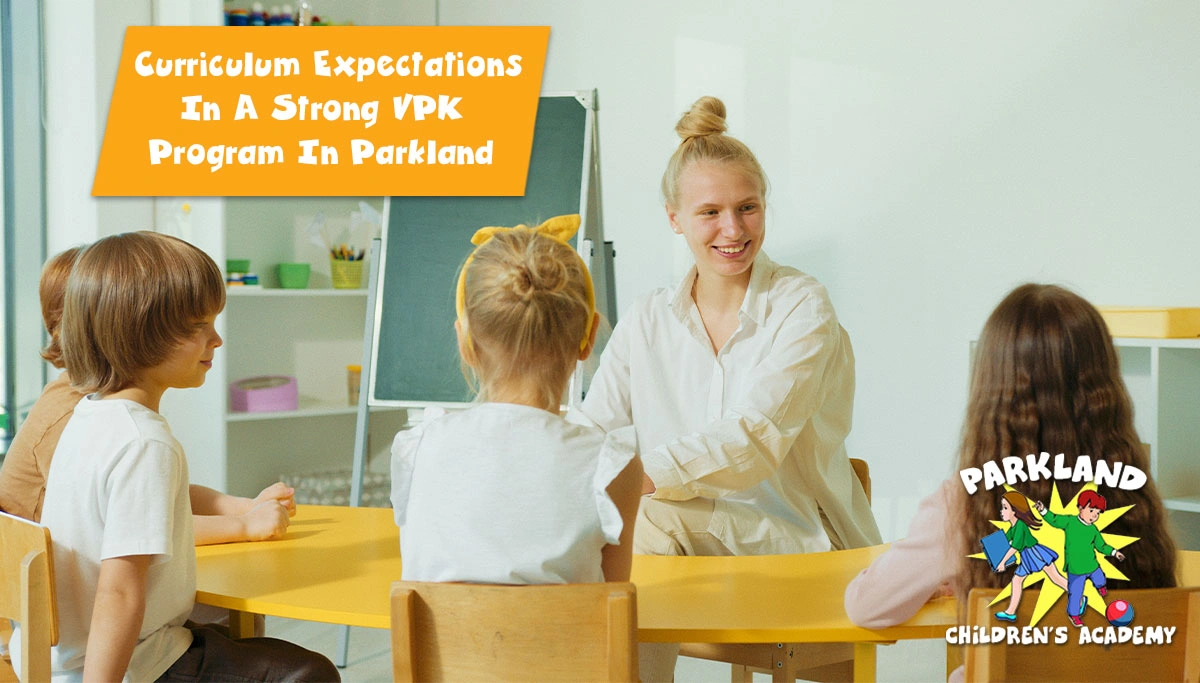
If you have a child under the age of 4, you might want to know more about Florida’s voluntary prekindergarten program, or VPK. The VPK Program in Parkland helps young children be ready for formal schooling by using a robust curriculum that exposes them to the exciting world of reading, writing, and numbers. Children are also prepared physically, socially, and emotionally for the classroom environment.
While in VPK, they develop self-confidence, which allows them to enter the next phase of schooling feeling excited and ready. Here’s a deeper look inside the VPK curriculum that we cover at Parkland Children’s Academy.
VPK Approach To Early Literacy Skills

Literacy refers to the ability to read, write, listen with understanding, and speak. The foundations of early literacy for pre-K children involve learning sounds, recognizing words, and understanding that printed words have meaning.
While this sounds very formal, in a VPK classroom, it’s a lot of fun!
- Phonics games: recognizing and manipulating sounds in words, playing rhyming games, or fingerplays that combine songs with hand movements.
- Letter recognition: identifying letters and connecting them to their sounds, tracing letters of the alphabet, or playing naming games.
- Vocabulary and comprehension: interactive read-alouds introduce children to new words, while open-ended questions, story retelling, and discussions boost their verbal communication and listening skills.
Building Early Math Skills Through Daily Activities
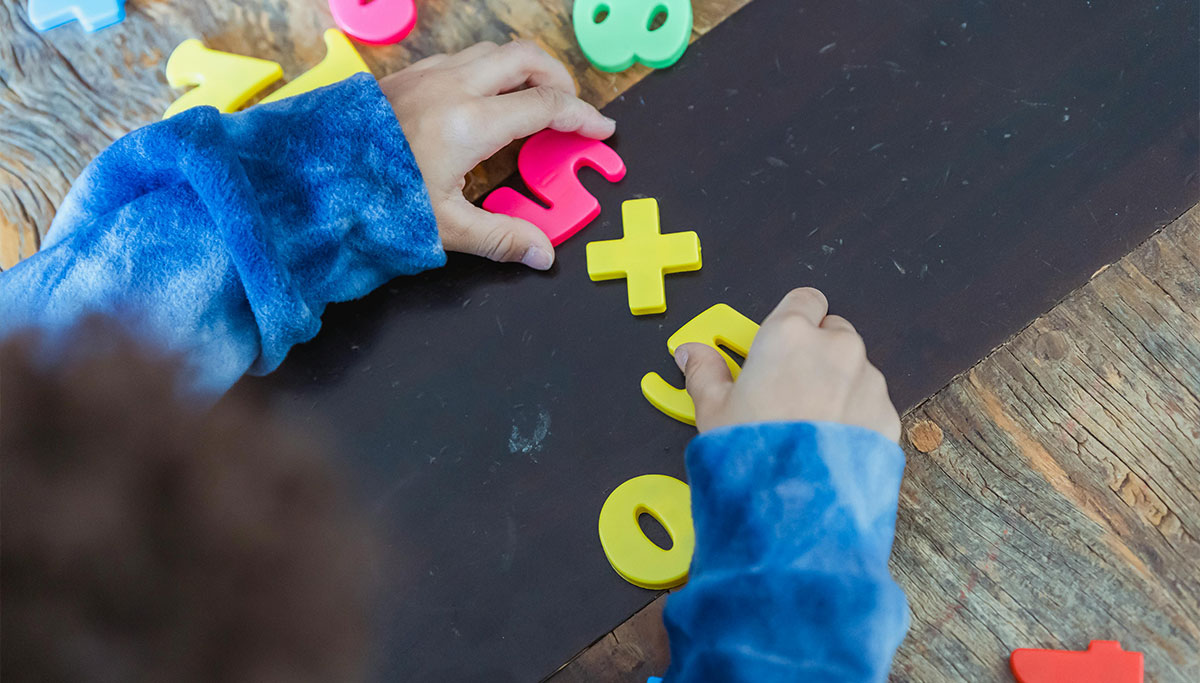
Whether we realize it or not, we all use numeracy skills every day in our normal lives. Think about organizing ingredients for a recipe, figuring out how hard to kick a ball to get it through the goal posts, or working out if we’ve got enough change to get milk and a snack at the shop.
4-year-olds have an enormous capacity for absorbing information, making VPK the perfect time to cement a strong foundation in number work.
Some of the concepts they’ll learn include how to:
- Compare and order things, for example, size: small, medium, and big balls.
- Group items and discuss which ones are the same or different.
- Identify the position of objects, such as over, under, next to, on top of, or behind.
- Notice and make patterns to develop mental math skills and reasoning.
Practicing early maths skills is often done practically in class to make abstract concepts more relatable, with activities such as;
- Setting a table with the right number of bowls and spoons.
- Seeing fruit cut into halves or quarters.
- Learning which activities happen at which times, such as snack time at 10 a.m., story time at 11 a.m., and home time at 12 p.m
The Role of Play-Based Learning in a VPK Program
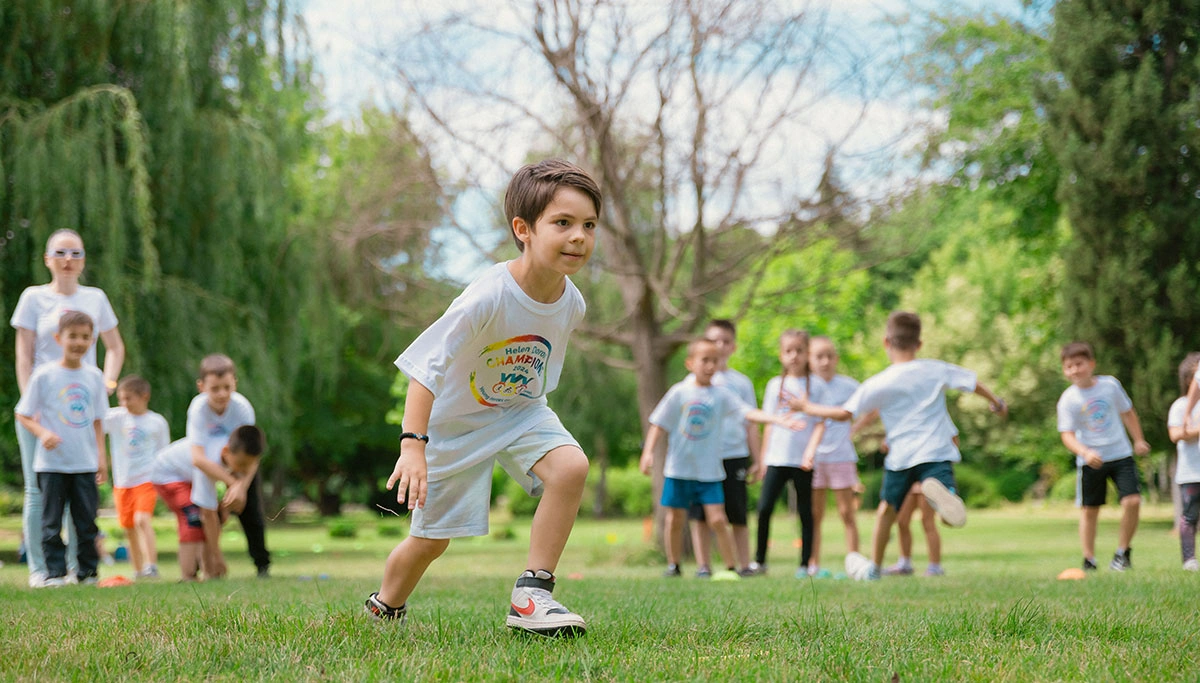
Through play, children explore ideas, test possibilities, and make sense of their world. VPK provides an intentionally structured environment that allows for curiosity to lead them to absorb the concepts being taught.
Playing teaches children:
- Problem-solving through playing pretend games, building with blocks, or overcoming physical challenges like navigating an obstacle course.
- Creativity as they engage their imaginations in pretend worlds or make up their own rules.
- Teamwork skills such as working together, communicating, and working through disagreements.
Apart from academic readiness, VPK helps children develop the socio-emotional skills they need for school.
There are three main areas of growth:
Emotional Regulation
For school to be a happy experience for a child, they need to be able to regulate the intense emotions that are normal for this age group, such as handling disappointments and learning to wait for their turn. They also work on self-control that enables them to sit and concentrate for chunks of time. Developing independence to confidently leave their parents or caregivers also happens during VPK.
The key social skills a 4-year-old needs for school–readiness include making friends and playing with other children. Understanding how to share and take turns makes it possible for them to cooperate with others during games or group activities. Conflict resolution through words instead of physical aggression can be taught at this age.
Classroom Readiness
VPK bridges the gap between preschool and kindergarten by helping children practice following basic instructions from a teacher. They’ll also begin taking care of themselves in increasing ways, such as navigating the bathroom by themselves or opening their own lunchboxes. They often practice managing their clothing, such as removing and hanging up their own jackets.
Structured Learning vs Free Play: Finding the Right Balance
Structured learning refers to teacher-led activities, while free play is unstructured time that allows the children to lead their current activity. Both have value in a VPK classroom. A balanced program flows between the two within a predictable timetable that creates a sense of security for the children.
Effective free play for this age group often works best in a structured environment with areas set up before class begins.
Consider setting up invitations to play, such as:
- Themed play areas that mimic real life: a kitchen, the grocery store, a sailing ship
- A sensory table with sand or water: include small toys or items from nature
- Create a building zone: ensure blocks or other building materials are easy to reach
How a VPK Program Prepares Your Child for Kindergarten
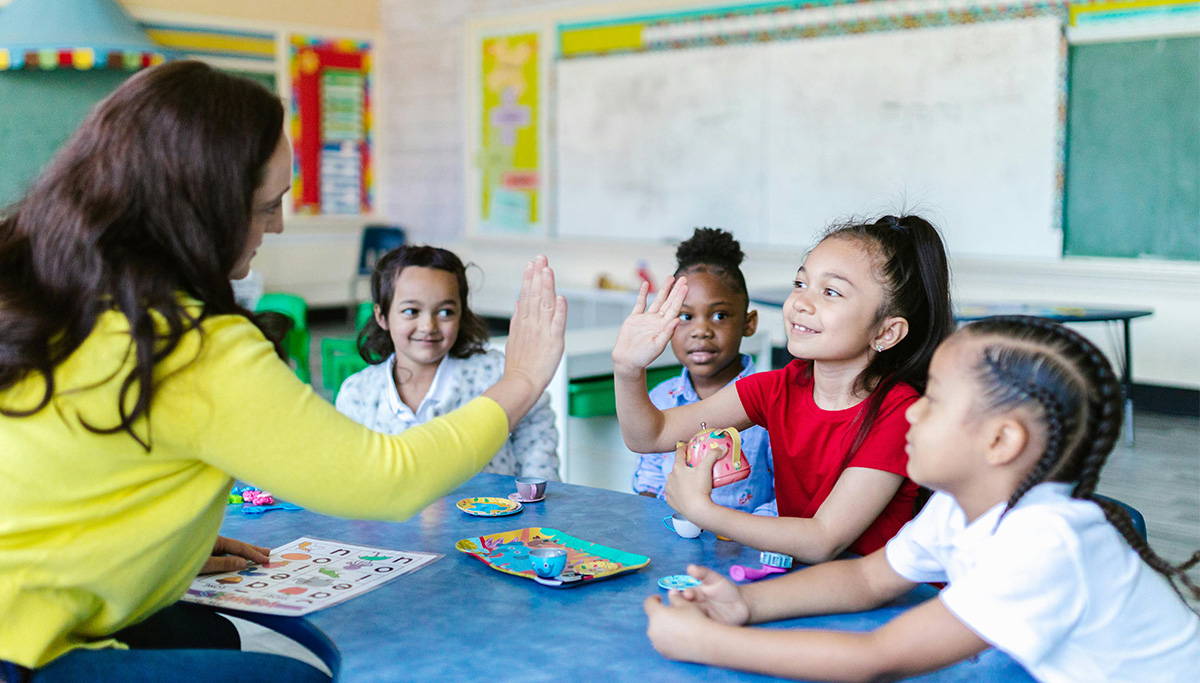
Children who attend Parkland Children’s Academy’s VPK program come away with more than an academic head start in literacy and numeracy. They get used to the structure of a kindergarten classroom routine, learn how to interact and socialise with their peers, and develop a deep love for learning.
VPK gives the teachers insight into potential learning difficulties. Early intervention often helps parents turn struggles into strengths and set the child on track for a satisfying, confident school career.
VPK Program In Parkland For Broward County Families
Take the stress out of going to school for your child and for yourself by enrolling them in the VPK Program at Parkland Children’s Academy. Our VPK teachers work hard to create a secure, loving environment that allows each child to thrive as they play to learn.
The school journey is a long marathon, but our VPK program develops their emotional resilience and instils the skills, attitudes, and social know-how to navigate it with joy. Contact us today for a tour of our facility or to book your child’s place.