- 1. Establish A Shared Reading Routine
- 2. Ask Open-Ended Questions About The School Day
- 3. Reinforce New Vocabulary
- 4. Attending Open Houses
- 5. Help With Homework Without Doing It For Them
- 6. Create A Learning-Friendly Environment At Home
- 7. Volunteer At School
- 8. Use Everyday Activities To Foster Learning
- 9. Invest In A Parent-Child Project
- 10. Play Teacher/Student At Home
- Early Childhood Education In Parkland
The early years of your child’s life are incredibly formative, with parental engagement forming a vital component of their development. When parents are actively involved in their kids’ education, they create a collaborative learning environment that supports their success on many fronts.
But how do parents practically stay involved in their child’s education within the confines of all of life’s pressures? In this article, we unpack 10 practical ways for parents to engage in their child’s early childhood education.

Reading to your child helps to reinforce and boost their literacy. Investing in a daily reading routine is a brilliant way to improve their diction, comprehension, and their imagination. This could comprise a bedtime story or even joining a book club together. Shared reading times enable your child to grasp concepts such as themes, plots, and characters. Reading spaces allow for the asking of questions and exploring life concepts, all within a natural conversation. It’s best to spend at least 15 minutes of reading at a time to foster an uninterrupted learning time.
2. Ask Open-Ended Questions About The School Day
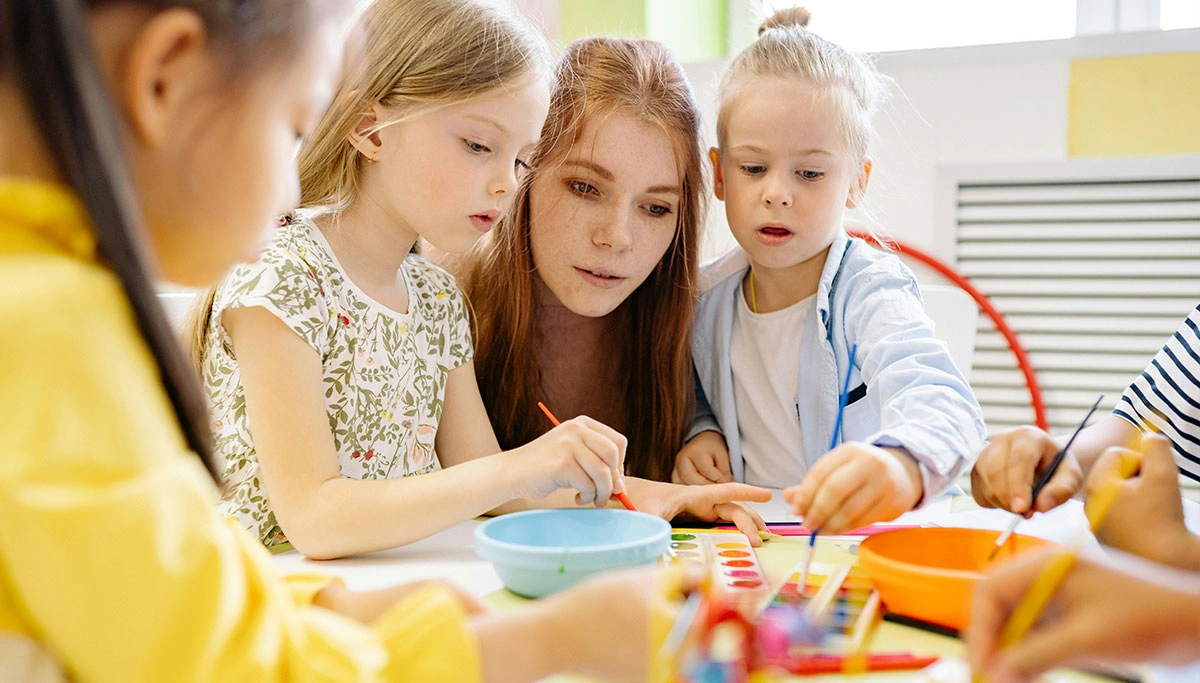
Parents can be all too familiar with the one-word reply of ‘good’ or ‘fine’ that comes from asking how school went on any particular day. Your child goes through significant experiences while at school every day that need to be unpacked. Gaining insight into your child’s school day is about phrasing questions correctly and asking open-ended questions that don’t just require a ‘yes’ or ‘no’ answer.
Some open-ended question ideas include:
- Who were you able to help today?
- What questions did you ask at school?
- Tell me something you did today that made you feel proud?
- What was one thing you learned today?
3. Reinforce New Vocabulary
Children are constantly learning new words, but they need help to provide the correct context when using new vocabulary. If you notice your child using a new word in conversation, this is a great time to help reinforce the correct usage and context of the word. You can offer different examples of how to use the word and even apply it during their reading time if the word is mentioned in a storybook. You can also buy a small whiteboard to write new words on and make a fun challenge in which your child needs to use a particular word creatively that day. Growing your child’s vocabulary is a sure way to invest in their early childhood education.
4. Attending Open Houses
Prioritizing shared spaces with your child’s school can help to facilitate meaningful development. Attending open houses creates the environment for a partnership to build between you and your child’s teacher. These events allow you to better understand the preschool curriculum and learning outcomes while giving you the platform to ask questions about your child’s social and emotional growth at school. Open houses create a collaborative environment in which parents and caregivers can partner with teachers and engage in meaningful change.
5. Help With Homework Without Doing It For Them

Homework is a great opportunity for your child to practice what they’ve learned at school. While it’s tempting to do their homework for them, this bypasses vital learning processes that your child needs to engage in. It’s best to see your role as offering guidance to help them understand concepts and to problem-solve, while ultimately ensuring that they do the homework. If you step in and do their homework for them, this will create more of an expectation to have to do their homework on an ongoing basis.
6. Create A Learning-Friendly Environment At Home
As parents, you have the opportunity to create a calm and learning-friendly environment at home. A great way to do this is to set up a dedicated space that is free of distractions for your child to do homework and engage in any other educational activity. You’ll need a small desk or even a dining table positioned in a well-lit area with the appropriate stationery supplies. Creating this space will help to ensure that your child engages in meaningful and productive times of learning.
7. Volunteer At School
Depending on your availability in the week, volunteering at school is a great way to be present in your child’s primary learning environment and shows that you value education. You’ll gain insight into how your chosen Parkland Preschool functions and where the main educational opportunities lie for your child. Whether you join the PTA, go along for field trips, or assist at the school snack bar, you’ll build friendships and better understand the complexities of your child’s daily environment.
8. Use Everyday Activities To Foster Learning
Many daily activities can assist your children in learning. These can include cooking or baking to teach math skills, shopping, which involves budgeting, or trips to the park or museum to cultivate their curiosity. Viewing everyday life as an opportunity for learning will spark your child’s inquiring mind.
9. Invest In A Parent-Child Project
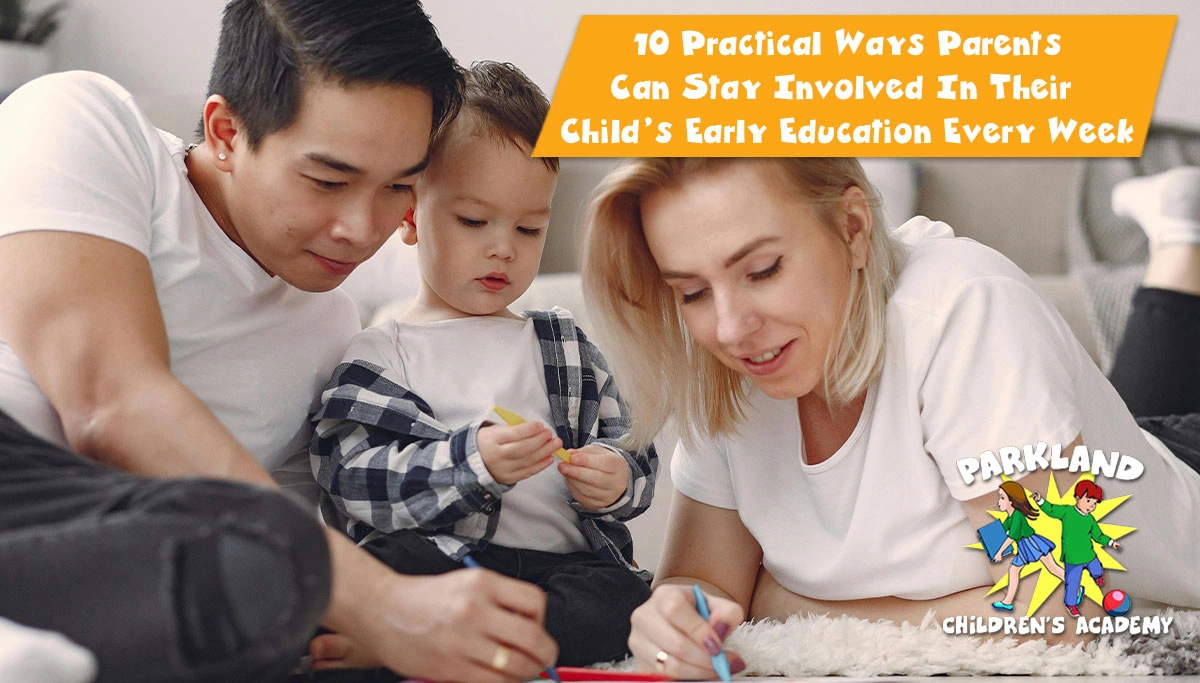
Creating a shared project is a great way to encourage ongoing learning while also creating a bonding space. This could involve a family scrapbook, a nature collage, or even a small DIY project. These projects can be displayed or even used in some instances, and they create a sense of shared accomplishment between parent and child.
10. Play Teacher/Student At Home
Our final practical tip is to play ‘school’ at home, where you allow your child to be the teacher and you are the student. Your child will need to teach you a concept that they learned at school, which will provide you with insight into what they’ve retained. You can set up a small whiteboard and ask them leading questions about something they learned. You will need to set up boundaries and keep this fun, as creating a rigid school environment at home may be counterproductive.
Early Childhood Education In Parkland

At Parkland Children’s Academy, we offer a preschool curriculum that turns every activity into an exciting learning experience. As a family-owned and run preschool, we provide a personal and holistic early childhood education environment for your child.
We value the parent-teacher relationships as a pathway to ensure your child receives a well-rounded and formative education both at school and at home. We focus on identifying the best-suited learning method for each child while providing tips suited to your child on how to implement a fun learning environment at home.
Thinking about enrolling your little one? Start your child’s learning journey with us! Call us at 954-688-5877 to find out all the early childhood education programs we offer at Parkland Children’s Academy.