
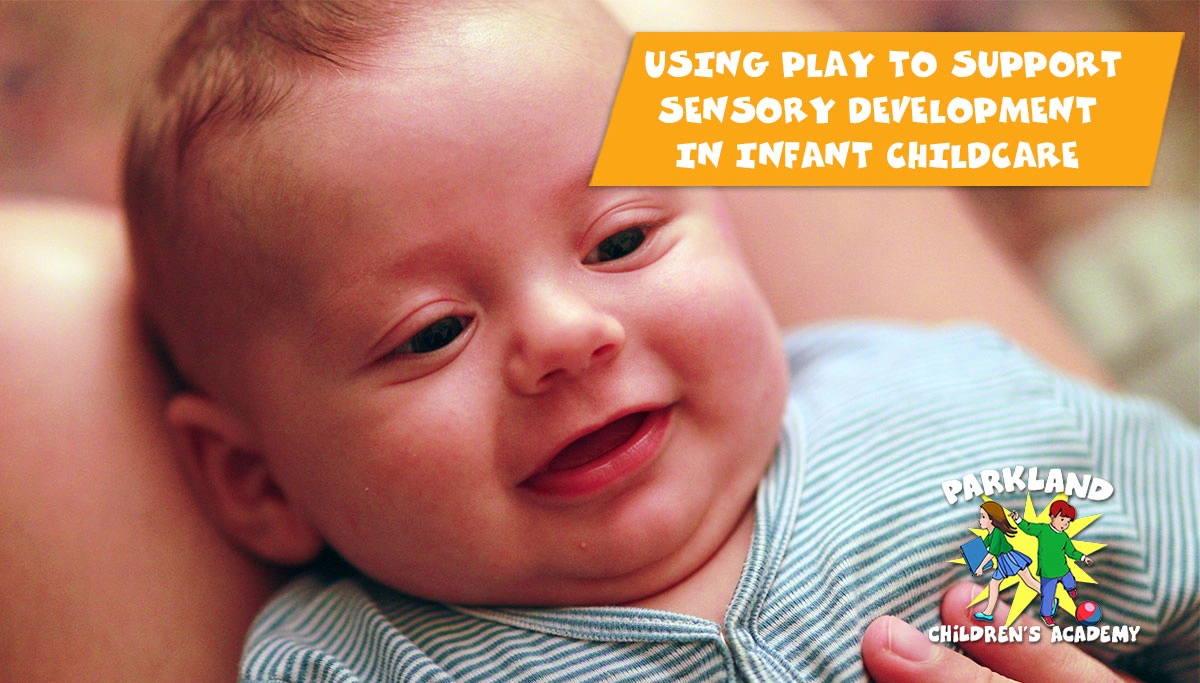
While they may seem like squishy potatoes at first, babies are learning so much about the world around them from the moment they exit the womb. Using touch, sight, taste, sound, and smell, babies start to develop essential skills for communication and exploration. That’s why sensory-based play is an essential part of infant childcare. It’s actually never too early to begin, even if it doesn’t seem like your baby is getting much out of it at first.
By engaging in sensory-rich activities at an early age, parents can help stimulate cognitive development. This helps lay a strong foundation for learning later on.
Continue reading to learn more about the importance of sensory play, activities you can start with your baby at home, and how infant childcare at Parkland Children’s Academy can help your baby start on a path to success.
The Benefits Of Sensory Play In Infant Childcare

You may not think much of the silly sounds and games you play when interacting with your baby. The truth is, these activities are the most effective ways to start cognitive growth. Let’s explore additional benefits of sensory play!
Enhances Brain Development
Sensory play engages multiple parts of the brain at once, facilitating neural connections that will eventually support thought and language development. This happens any time your infant touches textured objects, hears new sounds, or watches things move. Every new experience builds on this crucial brain development.
Builds Fine And Gross Motor Skills
Motor skills are developed and strengthened through manipulation of objects, such as grasping or pulling. Even the simple act of holding a spoon is training for writing or buttoning a shirt years down the road. Eventually, learning to crawl or play with water, whether in the bathtub or at a water table, will help with coordination and balance.
Encourages Curiosity And Problem-Solving
As infants learn about their surroundings, whether from the coolness of a spoon or the softness of a plush toy, they are essentially learning about patterns and object properties. As they start throwing or dropping things – yes, even food – this, too, is a learning experience about cause and effect.
Supports Emotional Regulation
No doubt you’ve seen a small child have a meltdown in a public space at some point in your life. Though it’s stressful for the parent and disruptive for everyone else, this happens because the skill of emotional regulation is still in development. Activities like running their little fingers through water or squishing non-toxic playdough can help infants manage stress and slowly learn how to self-regulate (but don’t expect this particular skill to reach full fruition for another couple of years!).
Sensory Activities To Start With Your Infant Now

These skill-building activities can start at any time, and don’t have to be complicated. In fact, the majority of them are pretty simple, and likely involve things you already do at home. Here are a few more ideas, based on your child’s age:
For Infants (0-6 Months)
The first six months of life are especially crucial for developing the senses.
Engaging activities for infants at this stage may include:
- Hanging mobiles above the crib with contrasting patterns and sounds
- Singing songs or playing soothing music to introduce auditory stimuli
- Using texture boards or toys to encourage exploring through touch
- Sensory bottles of liquids and small objects to start engaging vision
For Babies (6-12 Months)
Between 6 and 12 months of age, babies start to become mobile through crawling and rolling, which only increases their curiosity! Interactive experiences to facilitate that innate desire for discovery include:
- Water toys, such as sponges or other age-appropriate objects, to help introduce textures and temperatures
- Introducing them to a mirror so they can begin to recognize their facial expressions
- Promoting hand-eye coordination and motor skills through picking up objects, including solid foods, when they are introduced.
Simple Sensory Play Ideas For Parents

There are many opportunities in your home to start sensory play, without the need for expensive toys. Even everyday household objects can go a long way towards promoting healthy development. Consider the following activities:
Textured Playmats Or Baskets Of Objects
A small basket of blankets, crinkly paper, sponges, or Tupperware containers are perfect for your infant to touch and explore. They can do this while lying on a soft blanket or towel to introduce new textures, thus improving tactile awareness, fine motor skills, and promoting curiosity.
Water Play
Children have always loved water. A small tub with warm water that lets your baby splash and play with floating toys is sure to be a winner for most babies. This activity supports learning cause-and-effect, such as when you pour water from one container into another. Bonus: they’ll be having so much fun, they won’t realize they are also getting clean!
Sound Exploration
For this activity, all you need is a streaming device or even just your voice to play songs or nursery rhymes to engage your baby’s senses. Rhythm recognition helps improve listening skills and early speech development.
Mess-Free Sensory Bags
Take a Ziploc bag and fill it with water beads, pom poms, and other squishable objects. Be sure to seal it tightly. Tape it to the high chair and watch your child push the textures around. Make sure to only use this with supervision! This simple activity will help develop motor skills as well as vision tracking.
Infant Childcare In Parkland
Working parents in the South Florida region love Parkland Children’s Academy for our safe and educational infant childcare. We take care of babies from six weeks until two years old, focusing on stimulating natural curiosity and incorporating activities that will help them thrive in preschool and beyond (speaking of which, it’s not too early to start looking into a local preschool!).
Our teachers are passionate about instilling confidence and a love of learning early on, with a variety of games, songs, and exercises to build new skills. To learn more about infant childcare and beyond, call today at 954-688-5877.